Forthcoming Events

Railway applications - Wagons - Suspension gear - Standardisation
Command, Control and Signalling - Measure to be taken to improve track circuit shunting sensitivity
Track components for 25 tons (250 kN) axle loads on ballasted track
Power supply installations for passenger stock - Effect on electrical installations outside passenger coaches
Railway applications - Rolling stock - UIC approval procedure for diesel engines of motive power units
Railway applications - Rolling stock - Exhaust emission tests for diesel traction engines
Technical Conditions with which Automatic Couplers of the UIC and OSJD Member Railways shall comply to (…)
Financial relations between railway undertakings - Principles and terms of application
Infrastructure for tilting trains
Brakes - Electropneumatic brake (ep brake) and Passenger alarm signal (PAS) for vehicles used in hauled (…)

Heating Ventilation and Air Conditioning Systems
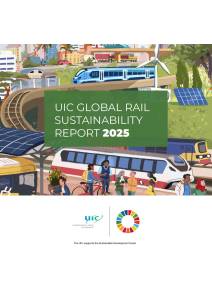
UIC Global Rail Sustainability Report 2025
New Methods for Safety Demonstrations (NMSD) - Recommendation & Proof of Concept
Impacts of Liberalisation on HSR Affordability

Recommendations for Combatting Human Trafficking on the Railways

Financial models for high-speed rail infrastructure

Best practices to increase the feeling of security
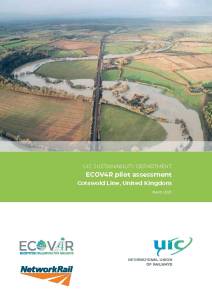
ECOV4R pilot assessment - Cotswold Line, United Kingdom
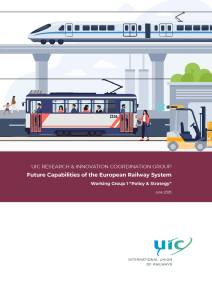
Future Capabilities of the European Railway System
Projects

Prepare railway staff for cultural changes linked (…)

The RERA Cyber project is part of the RERA (…)

The goal is to develop a standardized approach for (…)

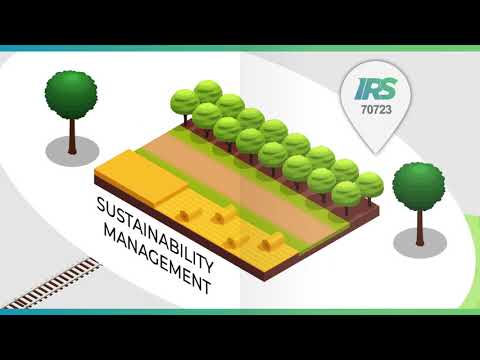
New Alternative vegetation management TechniqUes (…)
Videos


Podcasts
Websites
Press
Calculate your emissions!
Check the emissions of your travel and the travel of the products you buy in the best possible way!
EcoPassenger and EcoTransIT Worldare two user-friendly internet tools to compare the energy consumption, CO2- and exhaust atmospheric emissions for planes, cars and trains (and trucks) in Europe. With "the best possible way" we mean the most fair and comprehensive way. The methodology behind the calculations are sound scientific, focusing on a life cycle approach to the energy involved, and approved by the European Environment Agency.